
SNGPL Gas Meter Reading 2026 – 7 Easy Steps to Calculate Monthly Gas Units
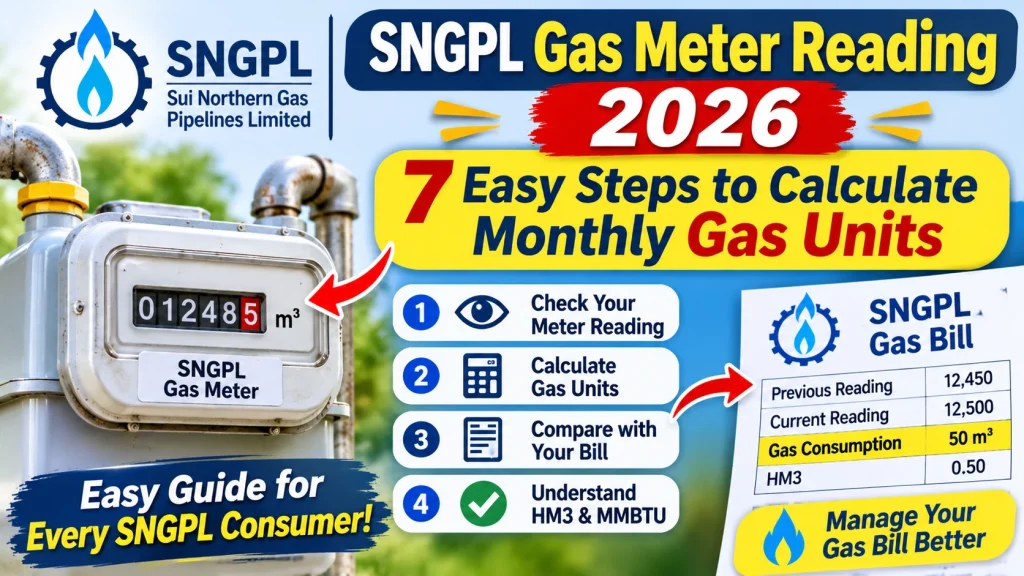
Understanding your monthly gas consumption can help you manage household expenses and identify unexpected increases in your gas bill. SNGPL Gas Meter Reading is an important part of checking how much natural gas your household consumes during a billing period. By recording your current and previous meter readings, you can estimate your monthly gas usage and compare it with the units shown on your bill.
Many consumers do not know how to read their gas meters or calculate monthly consumption. This guide explains how to check your meter, calculate gas units, understand billing information, and identify possible reading errors.
What Is SNGPL Gas Meter Reading?
SNGPL Gas Meter Reading refers to the numbers displayed on your gas meter that show the volume of gas consumed at your property. A meter reader records these numbers during the billing cycle to calculate your consumption.
Your monthly gas usage is generally determined by comparing the latest meter reading with the previous reading. The difference represents the gas volume consumed during that period.
Checking your meter regularly can help you understand your usage and compare it with your monthly SNGPL bill.
How to Check SNGPL Gas Meter Reading
Follow these steps to read your gas meter correctly:
- Locate Your Gas Meter: Find the gas meter installed outside or near your property.
- Identify the Display: Look for the mechanical number counter or digital display.
- Read the Black Digits: Record the main digits showing the meter reading.
- Ignore Decimal Digits: If your meter displays red digits or decimal numbers, do not include them in a basic whole-number reading comparison.
- Record the Date: Write down the date when you check the meter.
- Compare Readings: Compare your current reading with the previous month’s reading.
- Check Your Bill: Compare your calculation with the consumption information printed on your SNGPL bill.
Meter designs may differ, so check the instructions printed on your meter if the display is unclear.
How to Calculate Monthly Gas Units
Calculating monthly gas consumption is straightforward when you have two meter readings.
Use this basic formula:
Monthly Gas Consumption = Current Meter Reading − Previous Meter Reading
For example:
- Previous meter reading: 12,450
- Current meter reading: 12,485
- Difference: 35
Your meter shows a difference of 35 cubic metres for this example period.
This is a basic meter-volume calculation. Your final billed consumption may be adjusted according to applicable gas billing rules, pressure and temperature factors, calorific value, and tariff calculations. Therefore, the difference should not automatically be treated as the final billable units.
What Is HM3 in an SNGPL Gas Bill?
You may see HM3 or related consumption information on your SNGPL bill. HM3 is a volume unit used in gas billing and represents one hundred cubic metres.
For a simple volume conversion:
1 HM3 = 100 cubic metres
For example, 35 cubic metres equals 0.35 HM3 before any applicable billing adjustments.
Remember that the actual billed quantity can differ from a simple meter-reading calculation because gas billing may include standard-condition adjustments and other calculations.
How to Compare Your Meter Reading with Your SNGPL Bill
After calculating your consumption, check your monthly bill to understand whether the recorded usage appears reasonable.
Look for these details:
- Previous meter reading
- Current meter reading
- Units consumed
- Billing period
- Meter reading date
- Gas charges and applicable taxes
If your calculated difference does not match the bill, first check whether both readings cover the same billing period. Also consider whether the bill uses adjusted consumption rather than the raw meter difference.
For further verification, visit the official SNGPL website at https://www.sngpl.com.pk/.
Why Has Your Monthly Gas Consumption Increased?
If your gas usage suddenly increases, several factors may be responsible:
1. Increased Gas Usage: More cooking, heating, or hot-water use can increase consumption.
2. Gas Heater Usage: Using a gas heater for longer periods may increase monthly units.
3. Faulty Appliances: Poorly maintained appliances may consume more gas than expected.
4. Meter Reading Differences: A reading recorded incorrectly can affect your bill.
5. Gas Leakage: A suspected gas leak requires immediate attention and professional inspection. Do not attempt to repair gas equipment yourself.
What to Do If Your SNGPL Meter Reading Is Incorrect
If you believe your bill contains an incorrect reading, take these steps:
- Record your current meter reading and date.
- Take a clear photograph of the meter display.
- Keep your latest gas bill available.
- Compare the meter reading with the reading printed on your bill.
- Contact SNGPL through its official website or customer service channel.
- Request verification of the meter reading and billing details.
Do not try to open, repair, or adjust the gas meter yourself.
Tips to Reduce Monthly Gas Units
You can manage your household gas consumption with a few practical habits:
- Turn off gas appliances when they are not in use.
- Use cooking flames that match the size of your pots.
- Maintain gas appliances regularly.
- Avoid unnecessary heater usage.
- Check appliances for unusual operation.
- Record your meter reading every month.
These steps can help you monitor consumption and identify unusual changes early.
Frequently Asked Questions
1. How can I check my SNGPL Gas Meter Reading?
Locate your gas meter and record the main displayed digits. Compare the current reading with your previous reading to estimate consumption.
2. How do I calculate monthly gas units?
Subtract your previous meter reading from your current meter reading. The difference gives the basic gas volume consumed during that period.
3. What does HM3 mean in an SNGPL bill?
HM3 is a gas volume unit equal to 100 cubic metres. Your final billed quantity may include applicable adjustments.
4. Why is my SNGPL gas bill higher than expected?
Higher usage, heater operation, appliance problems, reading errors, and billing adjustments can affect your bill. Compare the meter readings and billing period before contacting SNGPL.
5. Can I check my gas meter reading online?
You can review your available bill information through the official SNGPL website. However, to read the physical meter, you need to check its display at your property.
Conclusion
Checking your SNGPL Gas Meter Reading is a simple way to understand monthly gas consumption and monitor household usage. Record your previous and current readings, calculate their difference, and compare the result with the consumption details on your gas bill.
Regular monitoring can help you identify unusual changes, understand billing information, and report possible errors to SNGPL. For official information and customer support, always use the SNGPL website.