
Sui Gas Bill High in Summer – Reasons and Billing Charges
If your Sui Gas Bill High in Summer has become a concern, understanding your gas consumption and billing charges can help you identify the reasons. Many households expect lower gas bills during summer because heating needs decrease. However, your monthly bill may still be high due to hot water usage, cooking habits, meter readings, previous outstanding amounts, or applicable government taxes and charges.
This guide explains the common reasons for a high summer gas bill, how to review your bill, and what steps you can take to manage household gas consumption.
Why Is Your Sui Gas Bill High in Summer?
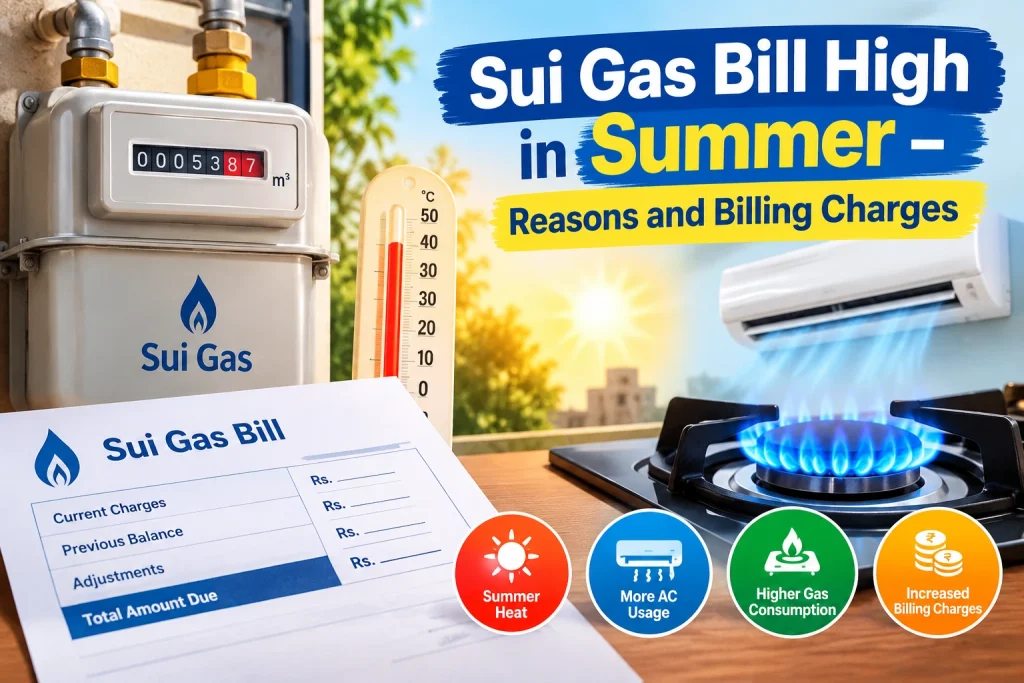
Several factors can increase your monthly gas bill, even when you use less gas than during winter. Before assuming there is a billing mistake, review your consumption and the details printed on your bill.
Common reasons include:
- Hot water usage: Gas geysers can consume gas throughout the year, particularly when used frequently.
- Cooking habits: Longer cooking times and frequent use of gas burners may increase consumption.
- Meter readings: An incorrect or estimated reading may create a difference between your actual usage and the billed amount.
- Previous balances: Outstanding payments or adjustments from an earlier month can increase the payable amount.
- Taxes and other charges: Applicable taxes, fixed charges, and other billing components may affect the final total.
Identifying the correct reason helps you decide whether to reduce consumption, verify the bill, or contact your gas provider.
Understanding Sui Gas Bill Charges
Your gas bill contains several details that determine the final amount. Reviewing each section can help you understand why the payable total has increased.
1. Gas Consumption Charges
These charges relate to the gas consumed during the billing period. Check your current and previous meter readings to understand whether your usage has increased.
2. Applicable Taxes and Fixed Charges
Your bill may include government taxes, fixed charges, and other applicable amounts. The charges depend on the relevant billing rules and consumer category. Check the latest official information rather than relying on outdated rates.
3. Previous Dues and Adjustments
If an earlier bill remains unpaid, the outstanding amount may be added to your current bill. Adjustments or corrections can also affect the total. Review the previous balance and payment history carefully.
4. Late Payment Charges
Depending on the applicable rules, late payment charges may apply when a bill is paid after its due date. Check the payment deadline and any surcharge shown on the bill.
How to Check Your Sui Gas Bill for Errors
If the amount seems unusually high, follow these steps before making assumptions about the cause.
Step 1: Compare meter readings
Look at the previous and current readings printed on your bill. Compare them with the actual reading displayed on your gas meter, where possible.
Step 2: Review the billing period
Confirm the dates covered by the bill. A longer billing period can result in higher total consumption than a shorter period.
Step 3: Check the consumer category
Review your consumer category and the applicable billing details. If you believe the category or charges are incorrect, ask the gas company to verify them.
Step 4: Check outstanding payments
Compare your previous bill with your latest statement. Confirm whether earlier dues have been paid and whether the payment has been recorded.
Step 5: Contact the gas provider
If you find a possible discrepancy, contact Sui Northern Gas Pipelines Limited (SNGPL) through its official website or customer service channels. Keep your consumer details, bill copy, and meter readings available when submitting a complaint.
Practical Ways to Reduce Gas Consumption in Summer
You may not be able to control every billing charge, but simple household changes can help reduce unnecessary gas usage.
- Turn off the geyser when hot water is not needed.
- Use an appropriate temperature setting if your geyser supports it.
- Check cooking flames and avoid leaving burners running unnecessarily.
- Keep gas appliances maintained by qualified professionals.
- Monitor your meter reading regularly and record monthly consumption.
- Investigate unusual gas smells or suspected leaks promptly.
Never attempt to repair gas pipes or appliances yourself. If you suspect a gas leak, avoid flames and electrical switches, leave the affected area, and contact the relevant emergency service or gas provider from a safe location.
Does Lower Summer Consumption Always Mean a Lower Bill?
Not necessarily. Your final bill depends on more than the amount of gas consumed. Taxes, fixed charges, outstanding balances, adjustments, and the applicable tariff structure can influence the payable amount.
For example, your household might use less gas in July than in January but still receive a higher-than-expected bill because of a previous balance or a billing adjustment. Comparing consumption alone may not explain the difference.
To make a fair comparison, review the meter readings, billing period, consumption charges, and other amounts on both bills. Use the latest official tariff information when checking whether the charges are correct.
Where to Get Official SNGPL Billing Information
For official billing guidance, service information, and complaint options, visit the SNGPL official website. Use the official contact channels to confirm current tariffs, billing rules, and any disputed charges.
Keep a copy of your bill and note your complaint reference number if one is provided. This makes it easier to follow up if the issue is not resolved immediately.
Frequently Asked Questions
Why is my Sui Gas Bill high during summer?
Possible reasons include hot water usage, cooking consumption, previous dues, billing adjustments, meter-reading differences, and applicable taxes or fixed charges.
Can a wrong meter reading increase my bill?
Yes. If a reading is recorded incorrectly or estimated consumption differs from actual usage, the bill may not reflect your normal consumption. Request verification if you suspect an error.
How can I check whether my gas bill is correct?
Compare the current and previous meter readings, review the billing dates, check outstanding amounts, and verify the listed charges. Contact your gas provider if anything appears incorrect.
Can I reduce my gas bill in summer?
Reducing unnecessary geyser use, managing cooking habits, maintaining appliances, and monitoring consumption can help lower gas usage. Your final bill may also include charges that do not depend directly on consumption.
Conclusion
A Sui Gas Bill High in Summer does not always mean your household has consumed more gas. Meter-reading differences, billing periods, outstanding balances, taxes, and other applicable charges can all affect the final amount. Review your bill carefully, compare meter readings, and contact your provider if you find a discrepancy. By monitoring consumption and understanding the charges, you can manage your household gas usage more effectively.