SNGPL Low Gas Pressure Complaint – Causes and Solutions
Low gas pressure can make everyday activities such as cooking and heating difficult. If your gas stove produces a weak flame or your supply becomes inconsistent, you may need to identify the cause and report the problem. Understanding the SNGPL Low Gas Pressure Complaint process can help you contact the relevant department and request assistance.
Your SNGPL Bill contains useful account information that may help when reporting a gas supply issue. This guide explains common causes of low pressure, practical checks, and how to submit a complaint.
Common Causes of Low Gas Pressure
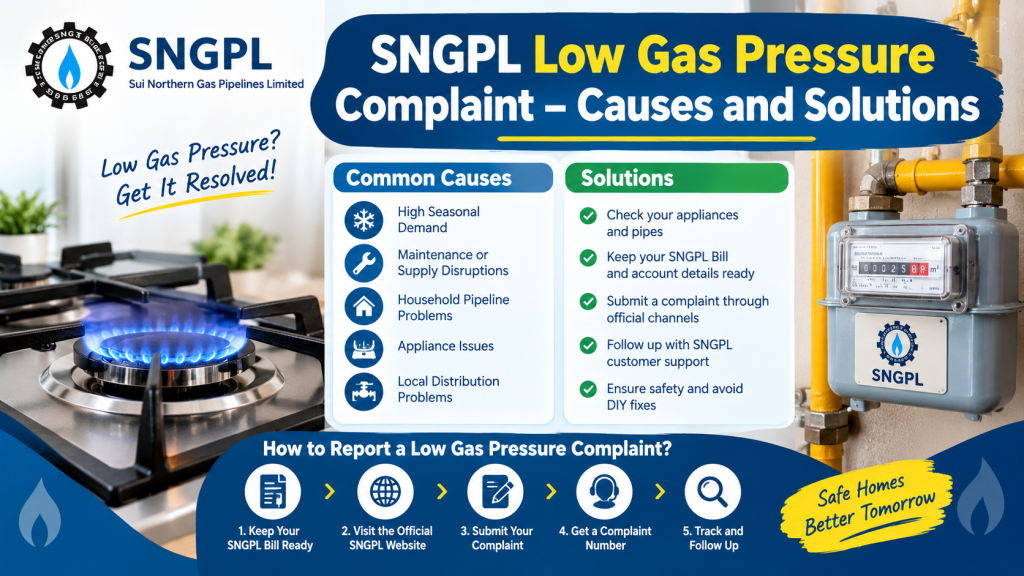
Gas pressure problems can occur for several reasons. Identifying the possible cause can help you explain the issue clearly when contacting customer support.
1. Seasonal Demand
During colder months, gas consumption often increases because households use gas for heating and other needs. Higher demand across a supply network may contribute to reduced pressure in some areas.
2. Maintenance or Supply Disruptions
Pipeline maintenance, repair work, or temporary network disruptions can affect gas supply. If several homes in your neighbourhood experience the same issue, the problem may be related to the local distribution network.
3. Household Pipeline Problems
A blocked, damaged, or incorrectly installed pipe may restrict gas flow inside a property. Internal gas installations should only be inspected or repaired by a qualified professional.
4. Appliance Problems
Sometimes, low flame is caused by an issue with the stove rather than the gas supply. A faulty appliance or blocked burner may affect performance. Avoid dismantling gas appliances yourself.
5. Local Distribution Issues
Pressure can vary between locations because of network conditions and supply demand. If the problem affects multiple households, report it to SNGPL so the relevant team can investigate.
How to Submit an SNGPL Low Gas Pressure Complaint
Follow these steps to report the issue through official channels.
For official assistance with low gas pressure, visit the SNGPL official website. You can use its customer service section to find complaint registration options and contact details. Keep your consumer information ready when reporting a gas supply problem.
Step 1: Check the Problem Safely
Check whether other gas appliances are affected, but do not attempt to adjust gas regulators or open pipeline fittings. If neighbouring households are experiencing the same problem, mention this when reporting the complaint.
If you smell gas, hear a hissing sound, or suspect a leak, avoid flames and electrical switches. Leave the affected area and contact the emergency gas service from a safe location.
Step 2: Keep Your Customer Details Ready
Before contacting support, prepare the information that may be requested:
- Your latest SNGPL Bill.
- Consumer or account identification details.
- Your service address and contact number.
- The time and frequency of the pressure problem.
- Whether nearby households are affected.
Do not publish your personal billing details online.
Step 3: Visit the Official SNGPL Website
Open the official SNGPL website. Look for the available customer care, complaints, or contact options and follow the current instructions.
Choose the appropriate category for low gas pressure or supply-related problems if it is available. Enter the requested details accurately and describe the issue clearly.
Step 4: Contact Customer Support
If you cannot submit the complaint online, use the customer service or complaint contact details published on SNGPL’s official website or your bill.
Explain when the problem started, whether the pressure changes during particular hours, and whether other homes are affected. Ask for a complaint or tracking number if one is provided.
Step 5: Follow Up on Your Complaint
Keep the complaint number and note when you submitted the report. If the problem continues, contact the relevant support channel again and provide your earlier complaint details.
A technician or authorized team may need to inspect the distribution system or assess the reported issue. Resolution time depends on the cause and the work required.
How Your SNGPL Bill Can Help
Your bill can help customer support identify the relevant customer account. Keep a recent copy available when making a complaint, but provide only the details requested through official channels.
Review the billing period and account information to ensure you are referring to the correct property. Remember that a low-pressure problem is a supply issue; it does not automatically mean that your bill is incorrect.
If you also notice an unusual charge, report the billing concern separately and request an explanation.
Practical Tips for Managing Low Gas Pressure
Use these precautions while waiting for assistance:
- Keep gas appliances clean and maintained by qualified professionals.
- Never modify a pipeline or regulator yourself.
- Avoid using unsafe homemade devices to increase pressure.
- Ask neighbours whether they have noticed a similar disruption.
- Save your complaint number and any response from SNGPL.
- Follow official safety instructions if service work is taking place.
These steps can help you report the problem effectively without putting your household at risk.
Frequently Asked Questions
Why is my gas pressure low in the morning or evening?
Demand patterns, network conditions, and local supply issues may contribute to pressure changes. SNGPL can investigate the reported location and provide guidance.
Can I submit a complaint online?
Check the official SNGPL website for the current complaint options. If online submission is unavailable, use the verified customer support details published by the company.
Do I need my gas bill to report low pressure?
Your latest bill can help identify your account, although the exact information required depends on the complaint channel.
What should I do if I suspect a gas leak?
Leave the affected area, avoid flames and electrical switches, and contact the emergency gas service from a safe location. Do not try to locate or repair the leak yourself.
Conclusion
An SNGPL Low Gas Pressure Complaint can help bring an ongoing supply problem to the attention of the relevant team. Identify the symptoms safely, keep your customer details ready, report the issue through official channels, and save your complaint number for follow-up. Keeping your SNGPL Bill available and describing the problem clearly can make the reporting process easier.